
Cities & culture
History, museums and charming towns
Discover the charm of Hanseatic cities, visit impressive museums and castles, or stroll through atmospheric city centres in the region.

The apartments are located near Beekbergen, the area where the high Veluwe plateau, with heights of up to 80 to 100 meters, transitions into the IJssel delta 3 kilometers to the southwest. The apartments are still 9 meters above sea level.
The house with the apartments dates from 1932. There used to be an old well here, and in 1844 the land was known as an immense heathland with a sheepfold, an old farmhouse, and a strip of coppice. The strip of heathland on both sides of Chopinlaan was sold in 1850 by the Wormermark to farmer Cornelis Brink, but was never cultivated until 1920. In 1922, café owner Berend Kamphuis bought the heathland with pine trees and divided the 3 hectares of heathland into plots of around 330 m². In 1931, the municipality of Apeldoorn bought the gravel road and named it Museumlaan and later Chopinlaan. Our house was one of the first houses on Museumlaan on the edge of Beekbergen, because the toll house used to be Museum Vaals. Now it is one of the better restaurants. There is a wealth of beautiful things in our neighborhood. We even found a treasure trove of money in our house. Maybe you will find your treasure too?
Close to our house lies the old Arnhemseweg road, which led to Arnhem via the Woeste Hoeve inn. Horses were changed at the inn in the carriage house, where the restaurant is now located, and people slept there. Traveling at night was not allowed, as bandits, mercenaries, and vagrants would attack you. Woeste Hoeve was a dangerous spot because the road ran uphill for a long way with loose sand. A double team of horses was often needed, and such a passage was called a sand trap or sunken road. The Woeste Hoeve inn and Beekbergen are located at the intersection of two important trade routes (Hessenwegen/Hanzewegen), from Apeldoorn to Arnhem, but also from Barneveld-Voorthuizen via the IJssel area. The road from Deventer via Loenen to Otterlo was particularly notorious for its many robberies.
The eastern routes ran from the Harderwijker Heerweg, a Hanseatic road that ran from Harderwijk, Uddel, Assel, Ugchelen, Beekbergen, Hall, Doesburg to Werden in Germany. The other went from Beekbergen, Teuge, Wilp via Deventer towards Münster. In 1811, Emperor Napoleon stayed at Herberg de Woeste Hoeve with Marie Louise. King William III also regularly passed through on his way to Het Loo Palace. Napoleon paved the Arnhemseweg, and later the old Tolhuis (1843) was built, where the stagecoaches passed through the Woeste Hoeve on their way to Arnhem.
The Kayersbeek stream flows 100 meters behind the apartments and owes its name to the Kayertsmolen, a mill that in turn owes its name to Hendrick Keijenberg, who also had a mill in Vaassen in 1702 and a paper mill in the Wormingermark in 1731. Wormingen was a hamlet, now part of Apeldoorn. This mill was located 500 meters from our apartments (Marchanstraat) on the site of the gas station.
100 meters behind the apartments, the Kayersbeek and the Zwanenspreng flow through the forest. At the end of Valeriusstraat, you can walk down the footpath over a small wooden bridge in the forest between the stream and the spring. Cross the Arnhemseweg. Diagonally behind the restaurant Tolweg 5, follow the streams again. Here is a unique piece of forest with sunken springs and beautiful bridges. A nice walk. If you walk through this forest, you only have to cross once at the end of the bike path (Egerlaan), and then you can cycle and walk endlessly through another forest with a spring head on the other side and under the viaduct of the Zr Meijboomlaan (A1 intersection) in almost continuous forests towards Hoenderloo or towards Garderen/Voorthuizen.
Close to our apartments, about 400 meters away behind a house, there used to be a salmon farm where they later raised trout because of the pure water of the Kayersbeek stream, which runs 100 meters from our house. On an old map by Frederick de Wit Comitatus Zuphaniae 1670, you can find the Egerpoel, which they later called Nagelpoel, a pool of water on the heath, 150 meters from our apartments. Behind a house on Oud Beekbergerweg, you will find the pond where, from 1840 onwards, medicinal leeches were bred for use in bloodletting.
Those leeches used to be called nails. The second son of Notary Walter, who used to live in Villa De Wilde Pieters (at the end of Hoofdstraat in Apeldoorn), could not become a notary too. His father had bought large plots of land in Berg en Bos (a residential area) and divided them up, so his second son became a doctor, and when the family started a small business, they traded in nails. The leeches were packed in jars and sent by post all over the Netherlands, or so the story goes.
We have apartments in Apeldoorn (city and nature) and chalets in the woods in Hoenderloo and Voorthuizen. You could consider putting together a total experience, for example, a cycling/walking/car/scooter/e-chopper, etc. package with multiple combined stays and as many forest routes as possible between Apeldoorn – Voorthuizen – Hoenderloo, combined with fun trips/sights. That is why we named our company Veluwedriehoek.
Our accommodations also focus on multi-generational stays. If requested in advance, we can also offer guided wildlife excursions, including e-wildlife excursions, autumn bellowing experiences with a nature photographer, slide shows of wildlife in the Veluwe, searching for big game/big 5, wolves, bison, or via Land Rover or guided walking excursions and excursions organized by Staatsbosbeheer, Natuurmonumenten, and others. You could also consider combinations of wild food, high tea, restaurant combinations, mountain biking/cycling, and mountain bike clinics. Our locations are also close to long-distance hiking trails.
This area features moraines, which are slopes of the Veluwe raised during the third ice age. The area therefore slopes from high to low. There are many streams and springs here. Streams are natural formations. Springs are dug streams created by making a hole in a slope. The higher level of groundwater present in a hill was tapped, creating a new stream. Springs were constructed from the 17th century onwards because extra water was needed for the 180 water mills that were located in the Veluwe area. These were used for the paper industry, corn mills, sawmills, oil mills, coppersmiths, and later for laundries because of the pure water. In our area in Apeldoorn, you can still find the Wenumse watermill with pond (wijher), which was first mentioned in writing in 1313. In 1395, it came into the possession of the Duke of Gelre, who leased it to Johannes Doys in 1434. In 1440, it was leased by the Monnikenhuizen monastery near Arnhem, which purchased it in 1493. During the Eighty Years' War, the watermill passed into the hands of the provincial government of the Veluwe quarter as a result of the Reformation, which saw the confiscation of all the monastery's possessions. Later, it became private property and is now managed by a foundation. Originally, it was a grain mill, but later became a copper mill with a mill pond, and was later converted back into a corn mill and a tanning mill (grinding oak bark into an acidic liquid for use in tanning leather for clothing, shoes, and morocco leather).
In Beekbergen, about 2 km from the apartments, you can still see the Tullekensmolen (1535) and the Ruitersmolen (1606) windmills. (IVN starting point Ommetje Ruitersmolen or Beekbergenpad Klopenpadroute or Beekbergenroute, which runs right past our house behind the police academy). A little further away in Loenen, on the Apeldoorns Kanaal, you will find the Middelste Molen (1622), now a charming paper museum. It is the only paper factory still running on water power and steam in its original state. The white paper (due to the water quality) from the Veluwe paper mills was even used to print the US Constitution, and Deventer is known as a book town because of the paper industry. Paper from the Veluwe was valuable and in demand worldwide. The village of Ugchelen, also close to our apartments, had 10 water mills, where Van Gelder still makes banknotes. Maarten van Rossum (1543) was the famous army commander under Duke Charles of Egmond of Guelders, who fought against Charles V. He owned Cannenburgh Castle in Vaassen and many water mills in the area. In the past, mills were a source of income for bishops, counts, dukes, and nobility through leasing. The residents/farmers were obliged by the authorities to have their grain ground at the mills within their domain, which is known as millage.
In Beekbergen, there was the Gasthuismolen, initially owned by Count Reinald I of Gelre in 1294/1295. It was a compulsory mill. Local farmers were obliged to have their grain ground there by law. In 1433, the Gasthuismolen came into private ownership of Mecheld ten Have, Rijck van Heerd and his wife, and Derck Jacobsz and his wife. They sold the mill in 1533, making it the property of the stewards of the St.-Pietersgasthuis in Arnhem. The St.-Pietersgasthuis fell under the ownership of the Pieterskerk Utrecht and was ultimately owned by the bishop of Utrecht. And the bishop of Utrecht had it on loan from the highest authority, which was the bishop of Cologne.
The St. Pietersgasthuis 1380 in Arnhem was originally a mint and was donated by Johan Wolterszoon van Arnhem, vicar and canon of St. Peter's Church in Utrecht, to be converted into a guest house (hospital) in 1407. Many wealthy people donated to the church at that time, as this ensured that prayers would be said for them after their death. The guest house still exists today, and you can visit its unique underground passageway system (labyrinth) in Arnhem (Rijnstraat).
Two years later, in 1535, Charles of Egmond, Duke of Guelders, granted St. Peter's Hospital in Arnhem permission to build the Tullekensmolen mill 2 km further away in Beekbergen than the Gasthuismolen mill. The Tullekensmolen was a fulling mill. Fulling is the process of felting wool fabric so that the fibers are pressed closer together, making it less susceptible to shrinkage. This was done by mixing hot water with urine and then stamping the fabric with their feet. It was hard and dirty work, which is why fulling mills were popularly known as stinkmills. In 1601, the Tullekensmolen was leased for 12 years by the stewards of St.-Pietersgasthuis to miller Martgen Orges. Millers earned a lot, but many millers had to pay high rents to tenants of churches, monasteries, guesthouses, or wealthy lords. The caretakers of St. Peter's Hospital even wanted extra rent for the water from the Beekbergen stream, a conflict that lasted for years. The court ruled against the caretakers of St. Peter's Hospital in this matter. Unfortunately, this was only after Marten's death. Marten Orges had a wealthy wife, and his gravestone can be found in the church in Beekbergen. Marten Orges wrote his name in German letters and called himself Pampiermacher. Orges is a Swiss village in the canton of Vaud near Yverdon, but Orges is also a French family name in Artois. It is believed that he came to Gelderland as a Swiss soldier around 1598 and was naturalized after the Battle of Nieuwpoort in 1600. Marten Orges' watermark was recently discovered in Mercator's famous Atlas from 1612. Today, the Tullekensmolen is home to a Model T Ford museum. Marten Orges expanded his business in 1606 with a second paper mill, the Ruitersmolen, which used to be called the small mill, while the Tullekensmolen was the large mill.
Between the 7th and 9th centuries AD, the area where we live was known for iron extraction from iron ore, and was then the Ruhr area of the Netherlands. Entire oak forests disappeared because they were used to make charcoal for heating the iron furnaces to extract iron. Charcoal did not heat the furnace sufficiently, leaving 30% slag with iron. This created large slag heaps, which can still be seen in the Orderbos, for example, where slag remains lie. Much of this slag was later melted in the iron furnaces in Deventer. Beekbergen, pronounced bikbargen in the local dialect, also refers to this Iron Age. The word bik means waste and barg is a heap. Much of the iron was exported, which led residents to buy large quantities of Rhineland pottery and tableware, which they found during excavations. There was even trade with England, as they found an English coin.
100 years ago, there was much less (primeval) forest, there were large sand drifts and sandstorms as a result of climate change, because in the 10th/11th century it became much warmer and drier, sheep farming and overgrazing were normal, plus free-roaming pigs that damaged trees and shrubs. There was overgrazing in agriculture, massive deforestation, and silting, also due to the trade routes with cart tracks that were constantly shifting. The advancing sand covered 1/3 of the Veluwe, and the village of Kootwijk even disappeared under the sand and was relocated. Rev. Heldering, who went to help the poor people in Hoenderloo, even had to take shelter from the sandstorms on his way to Hoenderloo. With the arrival of the steam train and cheap land, many forests were planted in the large sand drifts by wealthy people from the west because the land was very cheap. For example, south of Beekbergen was the great sand. Nearby is the Parc Speulderbolt castle and estate, where the Portuguese-Jewish Teixeira de Mattos was the first to tackle the sand drift. Scots pines were planted and 750 hectares of forest were created on the site of the large sand drift. He was the director of the Heidemaatschappij (Heath Society). His castle with 10 hectares of estate was later occupied by the SS and also by our royal family. Dr. Ooster did the same on his estate Bruggelen/England near our apartments. In the forest, you can still see his two Norwegian houses (1908) and sequoia trees. The area has unique plants and trees.
In Buggelen/Beekbergen, close to our apartments, you will find a court on a formerly prominent bare hill called Het Herenhul in the Engelanderholt. It used to be located in the county of Hamaland. Later, it became part of the Duchy of Gelre. This is probably the oldest court (Klaarbank) in Gelderland, where the Count of Gelderland, later the Duke of Gelre, and even later the representatives of the Habsburg monarchs and judges of the Republic of the Seven United Netherlands administered justice once a year from 1227 onwards. They did so together with the knights of the Veluwe and representatives of the cities of Gelderland on a high hill with a view over the entire region, far beyond the IJssel river towards Germany.
The last judgment of this Veluwe Regional Court was in 1620, and the judgments from 1423 onwards are still preserved in the Gelderland Archives in Arnhem in the so-called Klaarboeken (clear books). The location can still be found in the forest (memorial stone). Here, appeals were originally heard in the open air (vierschaar), but from 1404 onwards, they were heard in a mobile wooden hall or courtroom, and there was a gallows (galgenberg) because the crimes were mainly capital offenses. The duke decided on corporal punishment and the death penalty here and sat on the highest bench wearing a ducal hat with peacock feathers and a canopy above him. On either side, slightly lower down, sat the chancellor and the councillors. A few steps lower sat the drost of the Veluwe or the judge (rechter) of the Veluwezoom. Below them, considerably lower down, were the two benches for the knights. The city representatives sat even lower. If you wanted to participate, have a say, and vote in a market, you had to be an heir, i.e., you had to own at least a full or half farm.
A farmstead covered 16 hectares in a mark. One example of a large landowner was the Lord of Bronkhorst. The urban representatives were members of a court of justice (heimaal) for Beekbergen and Apeldoorn who represented the relevant judicial district, namely the pastors of Beekbergen and Apeldoorn. The court was not limited to criminal cases but also ruled on civil disputes. The court clerk and the land registrar sat on a small bench in front of the table at the lowest point. Appeals were possible here against the rulings of the magistrates of Harderwijk, Arnhem, and Hattem, among others. In addition to crimes, these included financial matters such as inheritance cases and a request from the duke for permission to double the leasehold rent in 1154 to the knighthood and small towns! In addition, the lord of the manor was also presented here to the Gelderland nobility, clergy, and third estate. Reinoud IV was inaugurated as duke here in 1405, and Duke Arnold in 1424. Many important discussions were also held here, for example between the cities themselves or with the knighthood.
The duke as lord of the manor, court officials, clerks, the executioner, representatives of cities, and the entire knighthood stayed at the Red Hart inn (mentioned in 1432 in an account from the city of Arnhem), which was located next to the current house (Engelanderweg 29). At the Rode Hert, 14th-century German Jacobakannen/Siegburg pottery, monastery bricks, and 15th-century noppenglas or roemerglas were found—items that were actually found in a city and not in Beekbergen—so “ducal drinking parties” were found during excavations, along with pieces of iron slag. In 1880, a pot containing silver coins from the period 1225-1237 was also found. These finds prove that important people were here at that time, and everything points to the location of the Rode Hert inn. The name Smittenberg of the restaurant in Beekbergen still refers to a pile of iron slag that probably lay in that neighborhood. Guests also stayed at other inns in Beekbergen, such as the Gouden Leeuw (currently a Chinese restaurant). The defendants and other guests stayed at the Aap inn, hence the expression “in de aap gelogeerd” (literally, “stayed in the monkey”). A large part of the knighthood probably camped in tents. Merchants came to sell their wares and a free market was held, as if an army had been stationed outside the city.
The government offered rewards for every wolf killed, and Willem Henrichs from Elspeet managed to shoot a wolf between Ugchelen and Assel. Now they are protected. During the Eighty Years' War, residents suffered greatly from violence, robbery, and looting. A jug with Spanish coins was found hidden nearby.
England, as part of Beekbergen, is already mentioned in writings from 801, in which Luidger Englandi acquires a share in the Braclog (Bruggelen) forest. And in 855, a monk named Folker donated one sixth of the Orclo forest (later Spelderbolt) to the Benedictine abbey of Werden near Duisburg on the Ruhr. All of this was land for cultivation. All these donations gave the church (the diocese) a great deal of land. It was the farmers of the Veluwe who cultivated and worked all this land. The inhabitants of Beekbergen lived mainly from agriculture and hunting. At that time, the church was not only important for the spiritual welfare of the inhabitants, but also for their material well-being. People were bound to the church, as well as to the lord of the manor (count and duke) and several other feudal lords (nobility). According to some, there was a monastery at Engelanderweg 22 on the old stream at that time, which is also where the old stream originates. The old stream is home to the rare brook lamprey and the spined loach, and along the stream there are rare plants such as the caddis fly, spotted orchid, bitter cress, and two-leaved golden saxifrage. Earlier in prehistory, there were inhabitants here (large burial mounds southeast of the Herenhul).
The old church is the oldest building in the municipality of Apeldoorn, dating from the 15th century. Previously, there was an early Gothic church built in the 11th/12th century from tuff stone from the Eifel region, with the upper part made of brick. The original spire was lost in 1841 when it was struck by lightning. The tower houses a bell from 1616, while the other bell from 1739 was stolen in 1943 and replaced in 1950. In the past, there was a detention cell at the bottom of the tower, accessible via the entrance to the tower portal and a door to the church. Missionary Luidger (742-809) is said to have built a wooden church on the same site in Beekbergen, but there is no evidence of this. The church tower dates partly from the 13th century and is owned by the civil municipality of Apeldoorn, but the church itself is owned by the Reformed congregation of Beekbergen. The organ dates from 1780 and was built by Gustav Schilling (Deventer). It comes from the old demolished St. Mary's Church on the market square in Apeldoorn. Stadtholder King William V and his wife Wilhelmina of Prussia no longer wanted to renovate St. Mary's Church (an old 12th-century cathedral) after it was struck by lightning and suffered other damage (1843). The king thought the church was too far away and wanted a church closer to the palace, so that is what happened. The king even had special rights in Apeldoorn; he decided which minister would be appointed, rather than the church council as was the case elsewhere. This was certainly the case after the banishment of a minister from Apeldoorn who took a less strict approach.
In the old church of Beekbergen, you will find the grave of miller Marten Orges, one of the founders of the paper industry in the Veluwe region. Marten was married to the wealthy Geertje Schut. The tombstone is recognizable by the Schut family crossbow and the letters FMO (Fecit = he made it) Marten Orges. Marten Orges' children took their mother's surname, which was not unusual at the time. Presumably, she had the money and Marten had the craftsmanship. The gravestone reads: “Anno 1626, on September 9, Meister Marten Orges, the oldest paper maker in Gelderland, rested in the Lord.” However, he was not the oldest paper maker; that was the miller of Aelst, where Marten was probably previously a servant. One of the four chandeliers was donated in 1777 by miller Berend Capel of the Gasthuismolen in Lieren. The church is dedicated to Saints Fabian and Sebastian. Murals were added in 1447.
The period from 900 to 1200 was a time of strife, disasters, and adversity due to war and the absence of towns and castles. The Count of Gelre was granted the Veluwe as a fief by the Bishop of Utrecht in 1215 and became lord of the Veluwe. He named the land terra nostra Velua, the first name of the Veluwe. He went to war with the Bishop of Utrecht and the Counts of Holland in the 13th century. Around 1250, the area was plundered and villages were set on fire. Most farmers were serfs and leased the land from a landowner. They were obliged to fight alongside their lord if he was attacked. Their plots of land were called huiskampen, which were areas of land surrounded by hedgerows in the immediate vicinity of a farm. These plots became smaller and smaller due to inheritance divisions upon death. In 1354 and 1355, the farmers rebelled and were persuaded to fight for their freedom. Duke Reinald of Gelre had incited them to fight against his brother Edward, the knights, and the cities.
Want to know what there is to do in the area? Click on the button below or take a look below.
Discover the charm of Hanseatic cities, visit impressive museums and castles, or stroll through atmospheric city centres in the region.
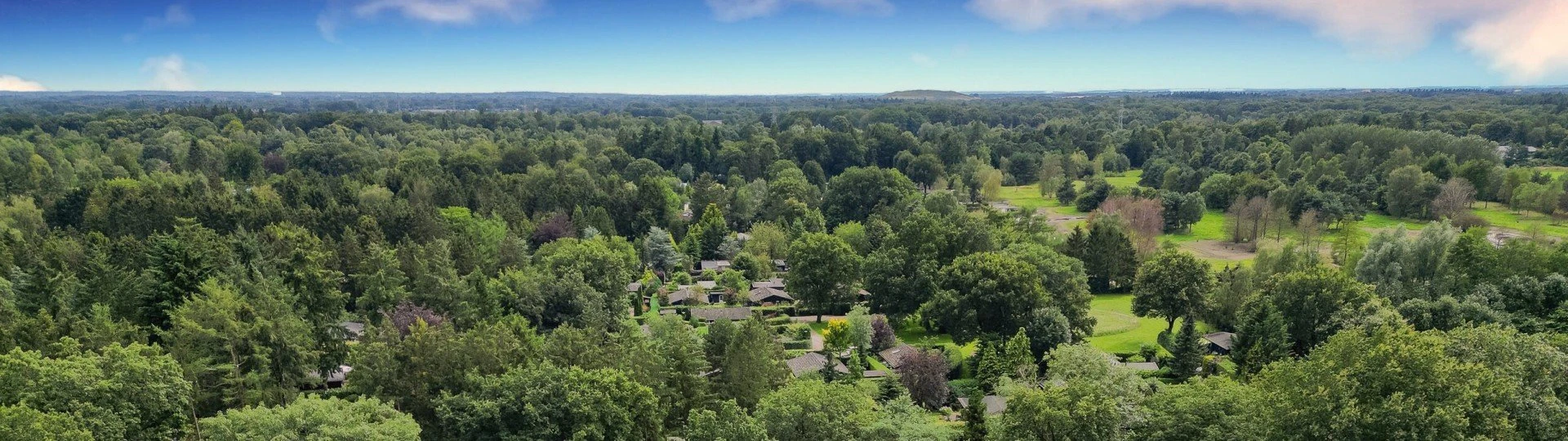
The Veluwe is just around the corner. Enjoy endless walking and cycling routes, forests, heathlands and sand drifts: perfect for nature lovers and adventurers.
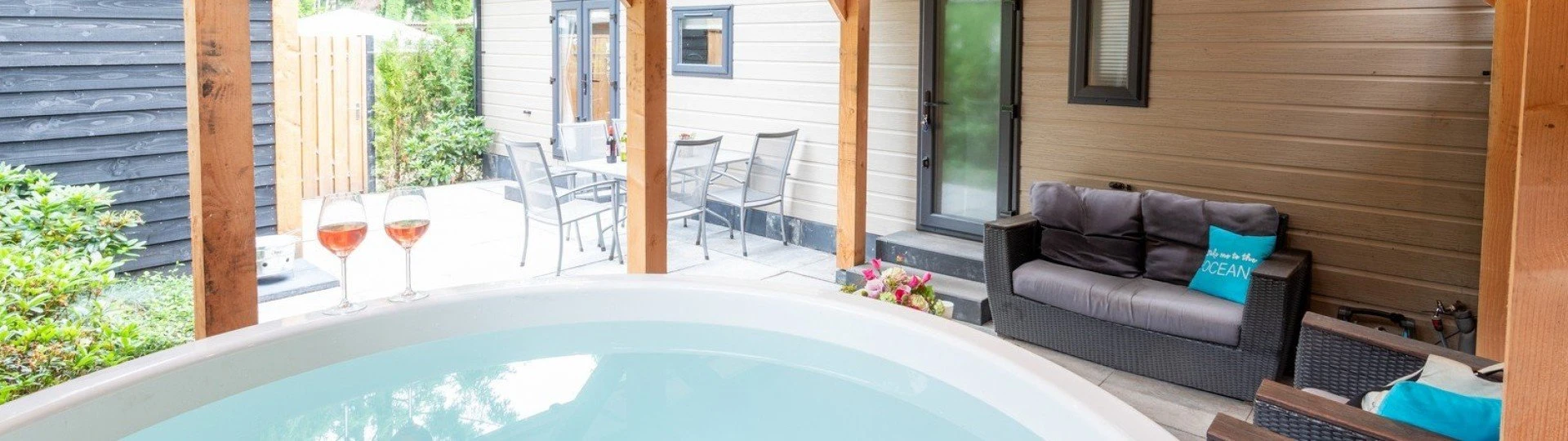
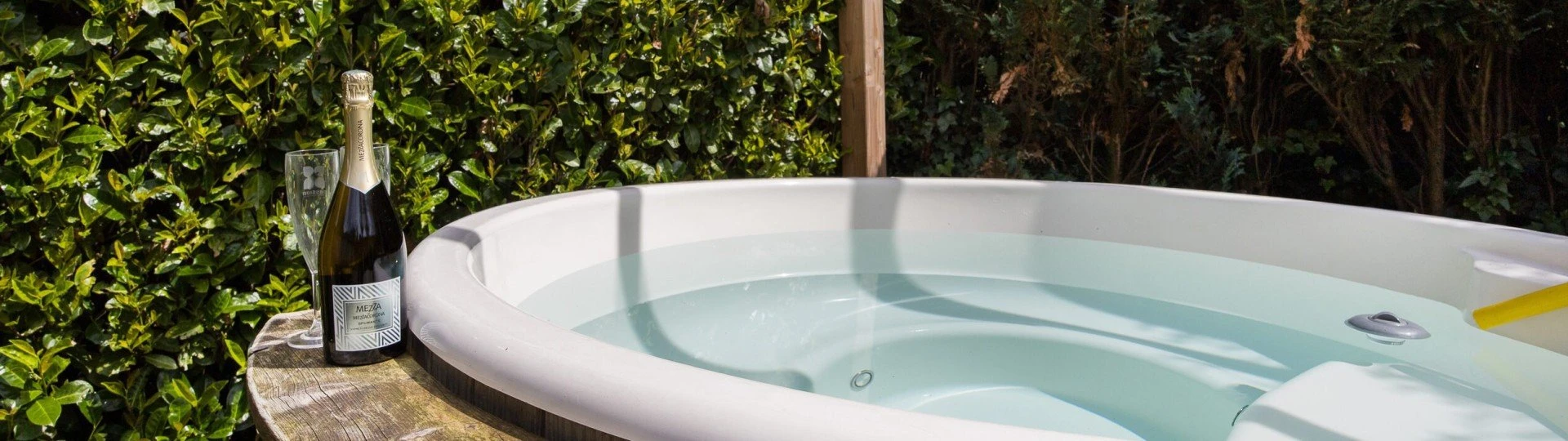
From wellness to atmospheric terraces: here you can relax and experience the Veluwe at its best.
From Apenheul to Julianatoren, from playgrounds to indoor activities when it rains: there is always a fun family outing nearby.
From the flats, you can walk to shops, sports facilities, restaurants and fun outings. Ideal for a quick errand or a spontaneous night out.


