
Cities & culture
History, museums and charming towns
Discover the charm of Hanseatic cities, visit impressive museums and castles, or stroll through atmospheric city centres in the region.

Hoenderloo originated in the early 19th century as a (clandestine) settlement in a ‘barren land’ of heath and sand drifts, far from the authority of the government. Vagrants and marginalized people lived here. On his way, Reverend Heldering had to take shelter from a sandstorm in the great sand dunes between Beekbergen and Hoenderloo. It was a few hours' journey from civilization. When Reverend O.G. Heldring traveled through the Veluwe in 1839, he was shocked. He found an impoverished population here, which he, together with kindred spirits from the Protestant Christian revival movement Het Réveil, took care of in the years that followed. There were about 150 people living in turf huts, without a church, without education, and even without a water source. Heldring understood that Hoenderloo could not remain dependent on collecting rainwater in a barrel if it was to keep up with the rest of the world. Here, high up in the Veluwe, this meant that a well had to be dug.
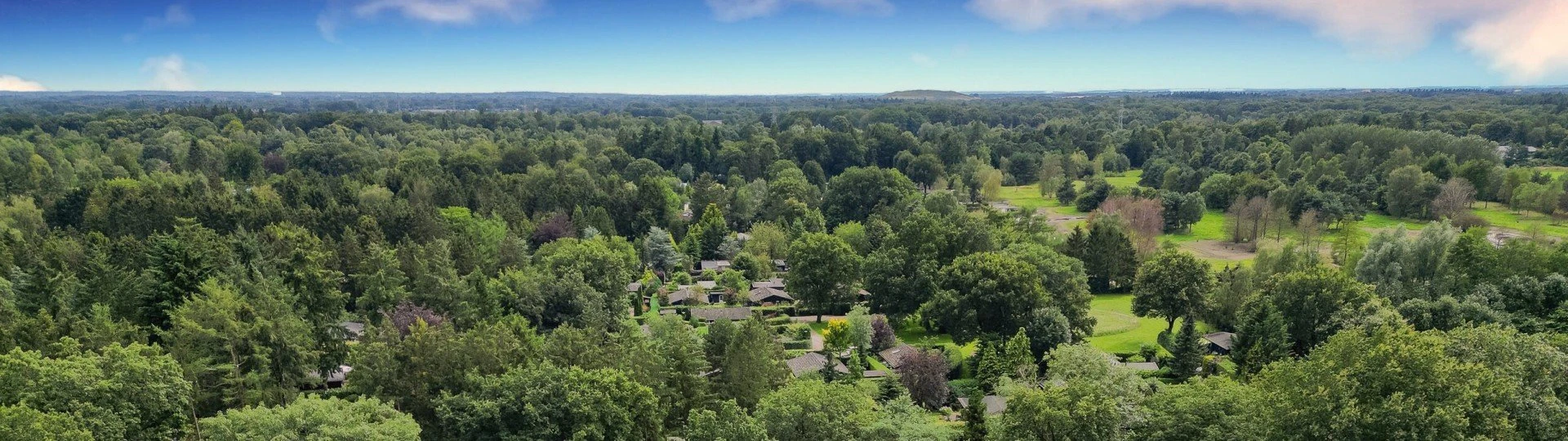
A first attempt, near Rust een Weinig, failed. The second attempt was successful. Later, water was also successfully found in other places in Hoenderloo. Hoenderloo's first public school was built next to the well in 1846. The stately house ‘Heldrings Hoek’, located near the well, was the home of the head teacher for many years. The first settler arrived in 1804. Hoenderloo is a combination of -lo(o) ‘forest’ and hoender ‘poultry-like bird’. The history of the Hoenderloo settlement is closely linked to the conditions of the subsoil and the surrounding landscape. During an ice age, the Scandinavian ice sheet extended to the central Netherlands. At the edges, the ice cap had protruding lobes that penetrated existing depressions, pushing up soil in the form of ‘moraine ridges’. These lobes advanced into the IJssel Valley and the Gelderse Vallei. This formed the Veluwe hill. The Hoenderloo area lies at the bottom of the western slope of the high moraine that stretches west of the IJssel valley between Hattem and Dieren. The village lies in a dry depression between two foothills of the moraine, to the north and south. Because there were no streams or ponds in the immediate vicinity and the groundwater is quite deep, Hoenderloo was not an obvious place for permanent habitation in the past. Nevertheless, there has indeed been habitation. Within the zoning plan area, a prehistoric burial mound has been found, as well as urns (fields) from the late Iron Age and a burial ground and pottery from the early Middle Ages.
Traces of habitation and iron mining were found in the large sandy area near Speulderbolt, and pottery shards from the early Christian era were collected north of the burial ground, alongside Roman pottery. Primeval forest traditionally grew on the moraine, with people occasionally burning down parts of it to cultivate the land. From the Middle Ages onwards, the primeval forest had to make way for more intensive use (as a game park, source of fuel and building materials, and grazing land for sheep flocks). This created an ‘empty’ land of heathland and sand drifts. There, various wealthy investors, largely recruited by Rev. Heldring, began planting estate forests on the barren land, including the large sand dunes in the area, for the production of wood and the creation of recreational estates. Forestry generated a lot of work, with the result that Hoenderloo grew steadily. The center of Hoenderloo initially consisted of a number of turf huts and gradually more houses made of wood and brick. Over the years, the settlement expanded to the east. Between the forests of the estates of the Christian Friends (later partly the grounds of the Hoenderloo Foundation) in the north and the Deelerwoud in the south, there was an unexplored heathland area, which was gradually divided into plots and cultivated into farmland. This area was called De Krim, and Veluwsehof Park is located at the end of Krimweg. At Heldring's request, village teacher Gangel regularly took neglected children into his home from 1847 onwards. They were not only taken in but also re-educated. This gave rise to the idea of an independent shelter, soon to be called a transit home. The Hoenderloo Foundation was established for this purpose in 1851. Due to its isolated location in the middle of large-scale reclamation areas, Hoenderloo was seen as a good place to get wayward boys back on the right track. They benefited from a working stay in a natural environment with healthy air, far away from the city. Moreover, the cheap land made the operation of such an institution profitable. The Foundation was later renamed the ‘Hoenderloo Group’.
From the late 19th century onwards, the Veluwe developed into a recreational attraction. Like Heldring, writers and artists in the 19th century felt strongly drawn to the Veluwe. They made walking tours through the area to experience and capture nature and the simple life. Partly due to the stories of writers such as Heldring, the landscape paintings of artists, and the growing awareness of the healing power of nature, the Veluwe became increasingly popular among wealthy citizens from the west. One of these citizens was shipping magnate Anton Kröller, who founded the De Hoge Veluwe estate west of Hoenderloo in 1909. Thanks to the construction of a new railway line, the region became accessible to everyone by train from the west, and the area became increasingly popular for short breaks. Holidaymakers visiting Hoenderloo and the surrounding area stay in inns or guesthouses, often in the homes of villagers. Hoenderloo has become a particularly popular holiday destination thanks to its location amid extensive forests and close to De Hoge Veluwe National Park. This popularity has resulted in a large number of recreational facilities in and around the village. The guesthouses of yesteryear have made way for hotels, campsites, holiday parks, and restaurants. Hundreds of tourists stay in the various day and overnight accommodations, especially in the summer. In addition to the Hoenderloo Group, tourism is therefore the most important economic pillar for Hoenderloo.
Ottho Gerhard Heldring was born on May 17, 1804, in Zevenaar, the third son of Rev. Ottho Gerhard Heldring (1762-1841). Ottho Gerhard Heldring went to study theology in Utrecht at the age of sixteen. Here he found himself in a completely different world. A difficult period full of doubt led to him becoming an extremely stressed student. He had to take a year and a half off and went to stay with his grandfather in Pfalzdorf. He recovered in this rural environment of heathland reclamation. Heldring was then appointed by his father as a minister in Hemmen on March 25, 1827. Already in his first year in office, Heldring was confronted with poverty in the Betuwe region, and from that moment on, he believed that employment was the solution to the problem of poverty.
In the 1930s and 1940s, Heldring began to develop into a philanthropist of national stature. In addition to fighting poverty, he took up the fight against gin.
During a day-long walk through the Veluwe with his friend Graadt Jonkers in the summer of 1839, they discovered the hamlet of Hoenderloo. The residents lived in poor huts and struggled with water shortages, and there was no school or church. When they left Hoenderloo, Heldring knew he wanted to fight for this heath colony. He described his experiences in Hoenderloo in the Gelderse Almanak, and donations poured in. Amounts ranged from 75 cents to 1020 guilders. And the well was built, as was a temporary schoolroom and then, in 1845, a permanent building. Together with the teacher of this school, he also established a halfway house for boys. In the years that followed, he did not forget Hoenderloo, for he did not rest until there was a church, which he considered to be the spiritual source. In 1857, the first stone was laid, and a year later, the church was consecrated.
The well was dug shovel by shovel (1844), as was the school brick by brick (1846), followed by the church, cent by cent (1858).
Meanwhile, he had turned his attention to the Réveil (https://nl.wikipedia.org/wiki/R%C3%A9veil). In May 1845, he expressed his deep concern about the state of the church and society in a publication and called for improvement based on a passionate faith. His appeal was successful, and from 1845 to 1854, the Christian Friends undertook an impressive series of social and ecclesiastical activities. Heldring played a central role in this. With him, a new period dawned for the Réveil. He was the bridge from the romantic-inner Réveil to the social Réveil.
In 1845-1846, Heldring worked hard to combat the serious consequences of potato blight in the Betuwe region. At the same time, Heldring also undertook other initiatives. One of these was the promotion of Christianity in the Dutch East Indies by sending Christian workers there.
Heldring devoted approximately twenty years of his life to combating poverty. In 1848, he took up a new cause: the fight against prostitution. To this end, he established the Steenbeek asylum in Zetten, intended for ‘penitent women’, women who wanted to start a new life. Saving souls was paramount, but resocialization was at least as important. In a two-year program, the girls were trained as maids so that they could earn a living in a normal way. Steenbeek was followed in 1857 by Talitha Kumi, intended for neglected young girls aged 12 to 16 who were at risk of ending up in prostitution, while in 1863 Bethel was opened, a home for girls aged 16 to 20 who were at risk of ending up in prostitution. Finally, in 1864, a Christian teacher training college was founded, while in 1870 the Vluchtheuvelkerk (Refuge Church) was consecrated. This church, built on an artificial hill and equipped with an attic, was also intended as a refuge from the floods that regularly ravaged the Betuwe region at the time. Here, too, spiritual and practical care went hand in hand.
De Hoge Veluwe National Park is the unique legacy of one of the most remarkable couples in Dutch history: Anton and Helene Kröller-Müller.
Anton enjoyed seeking peace and quiet in nature, particularly in the Veluwe region, perhaps as a counterbalance to his hectic and busy business life. It was also his love of nature, as well as horse riding, which they enjoyed together, and hunting, that led him to decide to establish his own estate: De Hoge Veluwe. From 1909 onwards (the couple had been living in The Hague since 1900), he began to gradually purchase plots of land, which he then linked together. By 1917, he owned no less than 6,800 hectares. This made the Kröller-Müller family the most important landowners in the Veluwe, second only to the royal family. After the estate was fenced in, Anton had red deer, wild boar, and mouflons released there for hunting purposes. For a time, there were even kangaroos. Pampel is an area of over 644 hectares that forms the heart of the Park. It was purchased by Anton Kröller on May 2, 1913. At that time, the area consisted of houses, barns, a sheepfold, a nursery, forests, heathland, farmland and pasture, sandy soil, coppice woodland, and farmyards. Today, the Pampel is the central area of the Park, including the Marchantplein, Museonder, the Park Restaurant, the Kröller-Müller Museum with its sculpture garden, the President Steynbank, the Franse Berg, and the grave of Anton and Helene Kröller-Müller. The name Pampel is reflected in the farmhouse, which is now a gamekeeper's lodge. Between 1650 and 1725, the Pampel was constantly threatened by advancing drifting sand. But the dunes offered sufficient protection. In the mid-nineteenth century, when large parts of the current Park consisted of sand drifts, the Pampel formed a ‘green oasis’ in this desert.
The young Anton Kröller (1862–1941) met his future wife Helene Müller (1869–1939) during an internship at the German company Müller & Co., where his brother Willem also worked. Helene Müller’s father had branches in Antwerp, Liège, Ruhrort, London, New York, and Rotterdam. In her youth, she moved from Essen to Düsseldorf, where she came into contact with the ideas of enlightened writers and philosophers such as Lessing, Goethe, Schiller, and especially Spinoza. Inspired by this, she would later formulate her own motto for life: Spiritus et Materia Unum, “spirit and matter are one.” Unfortunately, she was fiercely anti-Semitic during the war. Anton was hired by her father's company, and his business instincts were quickly recognized: he soon became responsible for the Dutch branch of the company. Anton and Helene married in 1888 and settled in Rotterdam. In 1889, Helene's father, Wilhelm Müller, died, after which Anton, only 27 years old, took over the entire company. Not without success: Anton built Müller & Co. into one of the first multinationals worldwide. Its main activities were shipping (he took over the Dutch Steamship Company with scheduled services from Rotterdam and Amsterdam, and Müller was listed on the stock exchange). He amassed a fortune trading in coal and iron ore.
Anton enjoyed seeking peace and quiet in nature, particularly in the Veluwe region, perhaps as a counterbalance to his hectic and busy business life. It was also his love of nature, as well as horse riding, which they enjoyed together, and hunting, that led him to decide to establish his own estate: De Hoge Veluwe. From 1909 onwards (the couple had been living in The Hague since 1900), he began to gradually purchase plots of land, which he then linked together. By 1917, he owned no less than 6,800 hectares. This made the Kröller-Müller family the most important landowners in the Veluwe, second only to the royal family. After the estate was fenced in, Anton had red deer, wild boar, and mouflon sheep released there for hunting purposes. There were even kangaroos running around for a while. Pampel is an area of over 644 hectares that forms the heart of the Park. It was purchased by Anton Kröller on May 2, 1913. At that time, the area consisted of houses, barns, a sheepfold, a nursery, forests, heathland, farmland and pasture, sandy soil, coppice, and farmyards. Today, the Pampel is the central area of the Park, including the Marchantplein, Museonder, the Park Restaurant, the Kröller-Müller Museum with its sculpture garden, the President Steynbank, the Franse Berg, and the grave of Anton and Helene Kröller-Müller. The name Pampel is reflected in the farmhouse, which is now a gamekeeper's lodge. Between 1650 and 1725, the Pampel was constantly threatened by advancing drifting sand. But the dunes offered sufficient protection. In the mid-nineteenth century, when large parts of the current Park consisted of sand drifts, the Pampel formed a ‘green oasis’ in this desert.
Helene Kröller-Müller devoted herself almost entirely to her great love, modern art. She was assisted and continuously advised by art educator and critic H.P. (Hendrik Petrus, 1871–1956) Bremmer. Bremmer, who was hired by the Kröllers in 1907 to work one day a week, helped Helene build an impressive art collection. From 1905 onwards, Helene and her daughter took art appreciation lessons from Bremmer, and she later invited him to give private lessons. He opened her eyes to modern art and a personal, empathetic experience of art. Her first work under his influence was Paul Gabriel's “Hij komt van ver” (He comes from afar). There were hardly any financial limits to what could be purchased; the money Anton earned at Müller & Co. offered almost unlimited possibilities. In just under twenty years, Helene assembled an art collection of over 800 paintings, approximately 275 sculptures, around 5,000 drawings and prints, and nearly 500 pieces of decorative art. Many neo-impressionists from the period 1886 and the early 20th century, such as Jan Toorop, Theo van Rysselberghe, Paul Signac, Georges Seurat, Henry van de Velde, and Anna Boch.
Among the drawings and paintings were 94 works by Vincent van Gogh, Claude Monet (e.g., The Painter's Boat), Pablo Picasso, Piet Mondrian (e.g., Composition with Red, Yellow, and Blue, 1927), Camille Pissarro, Paul Cézanne, and Rietveld art. There are also works by Theo van Doesburg and Bart van der Leck. With its 94 Vincent van Goghs, the Kröller-Müller has the most beautiful Van Gogh collection in the world.
In the beginning, Helene collected mainly for herself, but gradually she became increasingly driven by a desire to assemble a collection that could serve to uplift the community. By 1910, she had already admired Rome, Milan, Florence, and the great masters of the Renaissance and architecture. She thus recognized the great truth of Spinoza, and her need to fulfill her role in the world grew. In 1911, she underwent a life-threatening operation and decided that if she survived, she would have a museum built for her collection, which she wanted to bequeath to the Dutch people. She wrote, “Now the great miracle must come to pass. I am building my new house, and it will be a museum...”
In 100 years' time, it would already be an interesting cultural monument... as natural and alive as it had never been before. First, the Kröllers purchase an estate near Wassenaar, which they name Ellenwoude. After her life-threatening operation and “conversion,” Helene changes her approach to collecting; she no longer lets herself be guided by taste, but only collects works of art that “can stand the test of time.” A plan is hatched to engage the German architect Behrens, who leaves the design to Ludwig Mies, with whom Helene gets on well. But Helene does not get on with Behrens and Mies is dismissed by Behrens. The couple travels to Berlin, but Behrens refuses to revoke Mies' dismissal. The Kröllers then dismiss Behrens, and Mies joins their firm Müller&Co and creates a design. However, her advisor Bremmer urges Helene to give Berlage the same assignment. Helene wants Berlage to design together with Mies, but Berlage refuses, after which a competition begins. Helene clearly prefers Mies' model, but Bremmer chooses Berlage because “that is art,” and ultimately Helene chooses Berlage.
But... in 1915, Helene decided that she would rather build her museum house in the Veluwe region and sold the Ellenwoude estate near Wassenaar. Berlage began designing a gigantic building with living and exhibition spaces in 1918. A central hall 12 meters high with a crystal-shaped ceiling of colored glass and a sitting room for the gentleman and one for the lady. A dining room, all connected by a single door to the large hall of the Van Gogh room. But after constant interference in his design by Helene and arguments with Berlage, Berlage terminated his contract with the firm. Henry van de Velde then had to come up with a new design. Helene wrote about Berlage to her son Bob: “To me, he was always a small man, a grumpy person with an ugly, unpleasant character, but—a great artist!”
Both plans, by Berlage and Belgian architect Henry van de Velde, were masterpieces on paper, but due to financial problems at the firm, they were never realized at the foot of the Franse Berg. Work began in 1921 and a railway line was even laid from Wolfheze to transport custom-cut blocks of Maulbronner sandstone from Germany to the Veluwe. Due to the First World War, demand for iron and coal plummeted and Anton's company quickly accumulated a lot of debt, causing it to run into serious difficulties. Anton was therefore forced to halt construction of the museum in 1922 and informed Bremmer that no more works of art could be purchased. Helene wrote, “When I walk past the site these days, I feel as if I am standing at an open grave waiting for a dead person. Sometimes I still cannot believe that it will not happen. I am still waiting for a miracle.” Nevertheless, Helene did not abandon her dream of the great museum. Until her death in 1939, she continued to work out the details and further prepare the construction plans. In April 1935, the Kröllers, on the verge of bankruptcy, were forced to quickly transfer their Veluwe possessions to a newly established foundation in order to save the art from public sale: the Kröller-Müller Foundation.
The collection and architectural drawings of the Grand Museum designed by Henry van de Velde will have to be purchased by the State. Minister Marchant of Education, Art, and Science is given an enthusiastic tour by Helene, who tells him about her plans. He persuades the Council of Ministers to make a loan of 800,000 guilders available for the purchase in 1935. And so the Kröller-Müller Foundation donated its collection to the Dutch State on the condition that it would be housed in a new museum. That museum, referred to by Helene as a ‘provisional museum’, was built. The museum designed by Van de Velde was opened in 1938, naturally by Helene herself. It is still there today: the current Kröller-Müller Museum. On April 26, 1935, the same day that the Kröller-Müller Foundation donated its collection to the Dutch State, the National Park De Hoge Veluwe Foundation was established with the aim of acquiring, managing, and maintaining a Dutch national park and cultural center on the Hoge Veluwe. The mortgage loan of 800,000 guilders was used to make the estate the property of the Foundation. The St. Hubertus hunting lodge was also sold with the purchase of the land, but Helene and Anton were allowed to continue living there until their deaths.
However, the state only made 10,000 available per year, which was insufficient for the planned museum. In 1937, the Dutch government agreed to the construction of a much smaller museum, also designed by Henry van de Velde. The construction was financed by a large donation from a business associate, and workers from the public works program built it on the promise that the building would become the property of the state and that the painting collection would be donated by Kröller. The museum opened in 1938. Helene was present but too weak to deliver the opening speech, which was given by Anton. Bremmer was also absent for health reasons.
Helene was only able to enjoy her museum for a short time, as she passed away at the end of 1939. She was laid out among her beloved Van Goghs, directly in front of Four Sunflowers. She was buried on a black-painted farm wagon near the foundations of “The Great Museum.” The inscription on her gravestone, placed there after the war, reads: “I believe in the perfection of all that happens.” During the war, the art collection was stored in bomb-proof shelters and in the basement of the St. Hubertus Hunting Lodge. With the help of Canadian Lieutenant Colonel Levenston, a great art lover, the collection was retrieved from the shelter after five years.
Helene bought Van Gogh's first work, Forest Edge, from 1883, in 1908 for 110 guilders! The second work purchased in 1908 was Four Withered Sunflowers from 1887, a highlight from his Paris period. In 1909: The Sower (after Millet) from 1890 and Basket with Lemons and Bottle. In 1912, she bought Bridge at Arles from the Hoogendijk collection and paid more than five times the starting price, which caused quite a stir. Vincent van Gogh was the son of a minister, and faith played an important role in his upbringing. After first being an art dealer, teacher, theology student, and preacher, Vincent decided in 1880, at the age of 27, to become an artist. He was convinced that he could also serve God as an artist. He depicted poor farmers, weavers, and landscapes, especially ordinary people who had to work hard for their daily bread. An example of this is The Potato Eaters, a masterpiece from his Dutch period. His great example was Millet. Vincent was self-taught and taught himself to draw and paint. In 1881, he sought out his cousin Anton Mauve, who gave him painting lessons and taught him to paint still lifes. In 1885, he left Nunenen to live with his father and then went to the art academy in Antwerp for three months to learn figure drawing. After only three months, he left because the art academy in Antwerp was far too academic and went to Paris to live with his brother Theo.
Here he painted around 25 self-portraits, probably because he could not afford a model during this period. Helene bought a self-portrait in 1919 for 6,500 guilders, the only self-portrait in the museum's collection. In the beginning, Vincent worked mainly with pen, charcoal, and Indian ink. Later, he used oil paint, initially mainly dark colors, but in later works lighter and more colorful ones. In 1887, Vincent left bustling Paris. He went to the south of France, where the unprecedented use of bright colors and sparkling hues inspired him to use looser brushstrokes. The Japanese prints he collected with his brother influenced his work here. In Arles, he painted the drawbridge over a canal near the city with a passing covered wagon and the bright blue water. Here he used a technique he had learned from Japanese prints. Six months after his arrival in Arles, he painted Café Terrace at Night by the light of a gas lantern, depicting his first starry sky constellation exactly as it appeared on September 16 or 17.
This painting will be part of the major Van Gogh exhibition in Japan in 2025. Vincent suffered from psychosis and hallucinations and was manic depressive, for which he spent a year in a psychiatric clinic in Saint Remy. Here he used color to express his need for cheerfulness and happiness, hope and love. He wrote: “The uglier, older, worse, sicker, poorer I become, the more I want to take revenge with powerful, well-arranged colors.” He painted the garden of the institution in Saint Remy.
The standard-bearer of Dutch architecture at the time, H.P. Berlage, who was already working for the Kröllers, was probably commissioned to design the Sint Hubertus Hunting Lodge in early 1915. It was to be a country retreat for the couple in the park and the ideal base for Anton's hunting parties. Berlage designed not only the building itself, but also the entire interior, right down to the specifications. The same applied to the park-like surroundings with the pond. This makes the Jachthuis a so-called Gesamtkunstwerk, the only one designed by Berlage. The construction of the Sint Hubertus Hunting Lodge was completed in 1920. You can visit the Hunting Lodge on a guided tour, which is well worth it. All building materials were transported around 1915 via a specially constructed mini railway.
Next to the Kröller-Müller Museum is a sculpture garden featuring works by famous sculptors, including those from the 1960s. You will find works by Aristide Maillol, Jean Dubuffet, Marta Pan, Perre Huyghe, and Rodin. There are also two pavilions by Aldo van Eyck and Gerrit Rietveld.
Want to know what there is to do in the area? Click on the button below or take a look below.
Discover the charm of Hanseatic cities, visit impressive museums and castles, or stroll through atmospheric city centres in the region.
The Veluwe is just around the corner. Enjoy endless walking and cycling routes, forests, heathlands and sand drifts: perfect for nature lovers and adventurers.
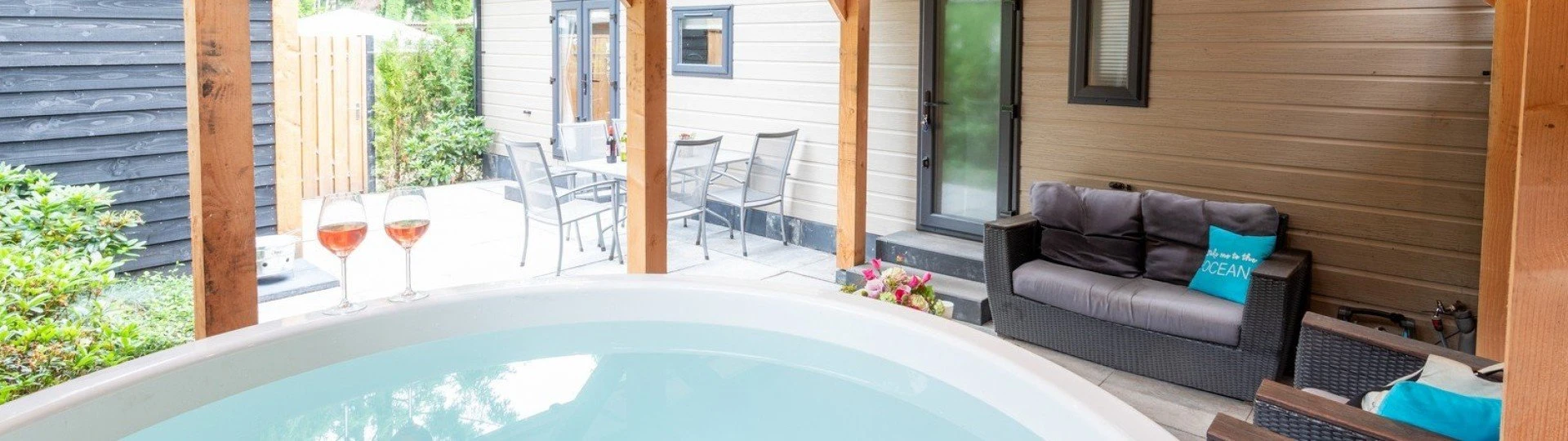
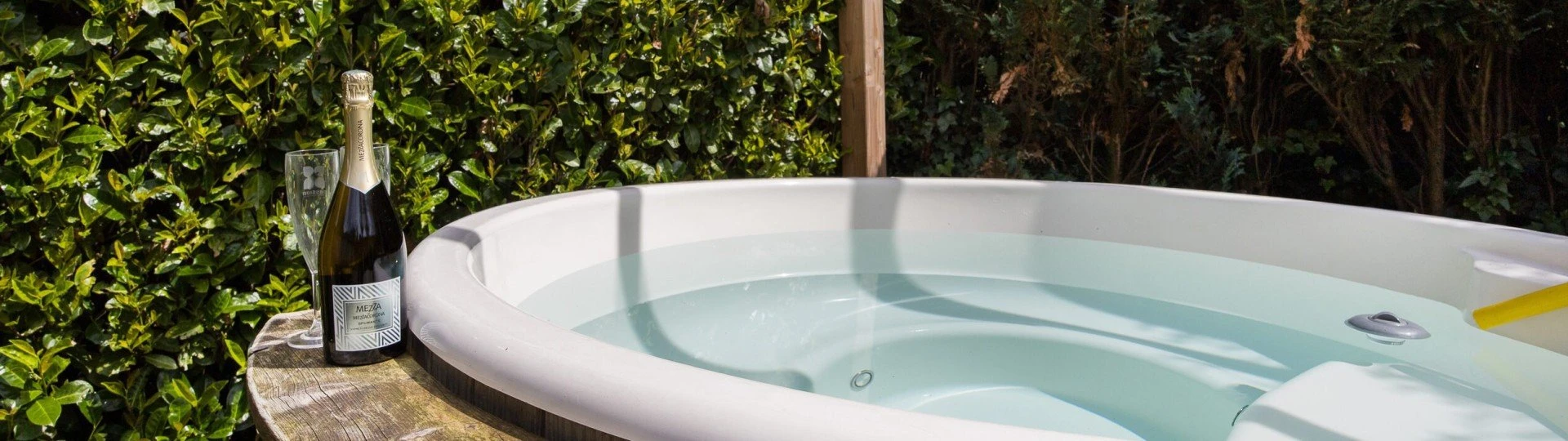
From wellness to atmospheric terraces: here you can relax and experience the Veluwe at its best.
From Apenheul to Julianatoren, from playgrounds to indoor activities when it rains: there is always a fun family outing nearby.
From the flats, you can walk to shops, sports facilities, restaurants and fun outings. Ideal for a quick errand or a spontaneous night out.


