
Cities & culture
History, museums and charming towns
Discover the charm of Hanseatic cities, visit impressive museums and castles, or stroll through atmospheric city centres in the region.

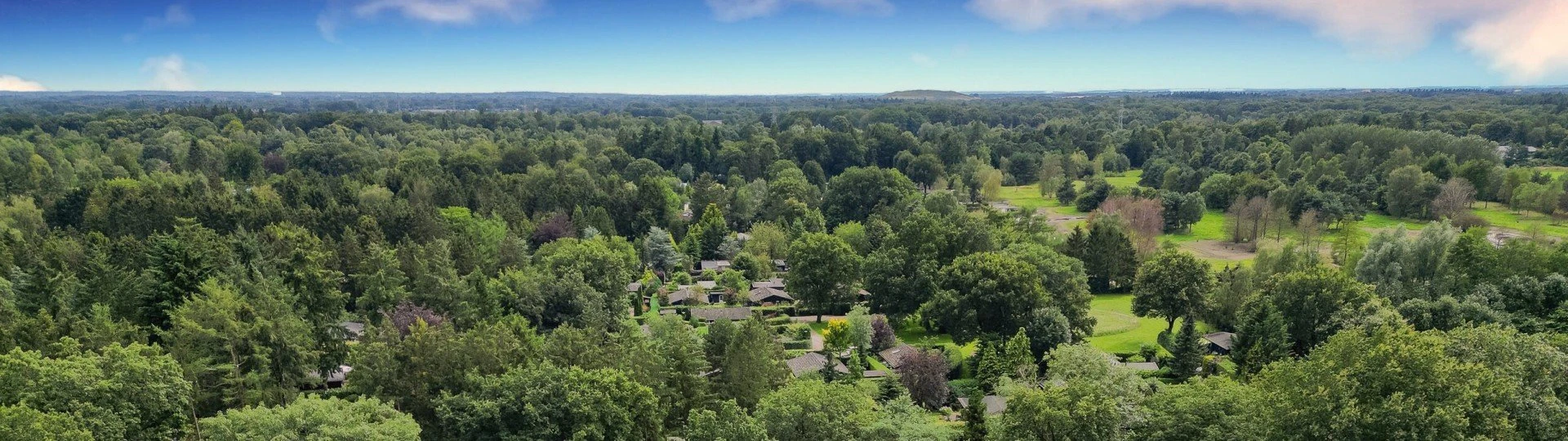
Voorthuizen: Welcome to Voorthuizen, we're glad you're here! Voorthuizen is now a tourist village within the municipality of Barneveld. Voorthuizen is known for its shopping center, fairground, numerous markets, and annual flower parade in September.
The name Voorthuizen appears in records dating back to around 1400, and early settlement dates back to around the 8th century. Voorthuizen originated at a ford in the now defunct Ganzenbeek and the intersection of the Hessenweg from Amsterdam to Deventer. There was also a second important trade route via Zutphen, t Loo Apeldoorn towards Voorthuizen and then towards Amersfoort Utrecht and Amsterdam. Voorthuizen was therefore an important stopping place and a junction of six routes. The tower of the church in Voorthuizen dates back to the 15th century. There are many poultry farms in the area. Voorthuizen used to consist largely of sheep farming, which is why there were many sheep dips for washing and watering sheep, such as the Kieftveen. Tourism started here early on, with the first tourist booklet being published in 1915.
As early as 850-950, the Hunnenschans, a ring-shaped defensive wall with water from the Uddelermeer, was located in the wider vicinity of Voorthuizen. Close to Uddel. Because the Vikings attacked more frequently, ring fortifications were built, presumably by the counts of Hamaland to guard the trade route.
A significant amount of iron was mined near Uddel (Uttiloch) and in the Veluwe region from Roman times until the 12th century AD. At that time, the Veluwe was essentially the Ruhr region of the Netherlands. Much of the Veluwe area was formerly owned by German monasteries, including those of Prum, Elten, St. Mauritius Magdeburg, and Werden. Arnhem is even mentioned for the first time in 893 in a property register of the Abbey of Prum. Many monasteries fell under the diocese of Cologne. What were they doing in the Veluwe? Historical research suggests that this had to do with the iron trade. Iron was extracted from the soil here and converted into malleable iron in some areas. It is estimated that more than fifty million kilograms of iron were produced. The Romans smelted chunks of bog iron ore (iron ore).
Later, iron was extracted from iron pits, which are shallow trench-like pits that were created when digging for iron ore. Aerial photographs still clearly show the former traces of iron pits in the landscape. Entire oak forests were converted into charcoal to melt the iron oxide from the iron ore in small ovens in pits. These were ovens in pits lined with clay. Once the iron had been melted and extracted, the ovens had to be smashed. However, a Roman oven has been found in Apeldoorn and replicas can be seen in museums CODA in Apeldoorn or just google replica of the Scharmbeek oven that they found in Germany near North German Scharmbeek or take a look at dorestadonthuld.nl. And search epe-heerde.knnv.nl under iron extraction from clinker bricks with photos and videos or ivn-apeldoorn.nl under traces of iron. Near Uddel, charcoal is still made in charcoal kilns, which are pits with stacked oak logs about 1 meter in diameter that are covered with sod and then set on fire. The sod ensured that little oxygen reached the fire. The logs did not burn completely, leaving charcoal behind. This oak wood was never older than 30 years and was harvested from special woodlands that were harvested every 30 years. Such logs can still be seen in the Veluwe.
Clapper stones are clay bricks with a hollow center caused by the drying out of the clay, with iron ore in the core. When you shake the brick, you can hear the iron rattling inside. Because the oven temperature remained too low due to the use of charcoal, 30% of the iron ore was unusable. This was called wolf or loup, and was thrown onto waste heaps. There are images of wolf and iron furnaces on Google. Near Apeldoorn, a slag heap has been left intact, containing an estimated 650,000 kilograms of slag waste/wolf. Much of the wolf was later remelted in the iron industry in Deventer. But slag heaps containing wolf can still be found in the Veluwe. The Vikings made raids from Dorestad (Wijk bij Duurstede). There was a lot of wealth due to the iron smelters in the Veluwe. The Vikings were attracted by the wealth and carried out raids, massacring the entire population of Zutphen, as you can still see in the museum in Zutphen. Partly due to the iron industry, many primeval forests disappeared, and the Hanseatic roads (cart tracks) became wider and wider due to the loose sand.
Climate change, with warmer periods, combined with farmers grazing their livestock (pigs, goats, etc.) in the forests and illegal logging, caused further deforestation. This created enormous sandy plains. Around 1800, one-third of the Veluwe was covered in sand drifts due to the advancing sand, and the old village of Kootwijk disappeared under the sand and was relocated. There were even sandstorms. The sand threatened the fields and pastures. Between 1850 and 1880, the steam train made it easier for wealthy people in the west to reach the Veluwe. They bought up the sand and planted large areas of coniferous trees. That is why the Veluwe is now such a wooded area.
Close to Voorthuizen, in the woods near Drie, you will find a large hole in the middle of the forest. This is the Solse Gat, a remnant from the Ice Age that the Germanic tribes used as a place of worship for their sun god Sol. This hole is said to contain a sunken monastery with many towers. Look it up under the legend of the Solse Gat.
In 1543, Gelderland lost its independent status as a duchy under Duke Charles of Guelders and was forced to recognize Charles V as its new ruler. Gelderland faced the Inquisition during the Eighty Years' War. The pastor of Garderen near Voorthuizen, Jan Gerritsz Verstege, better known as Anastasius Veluanus (the risen Veluwenaar), who had been a reformist preacher for six years and attracted many listeners, was taken into custody and forced to admit that he had said wrong things. All his possessions were confiscated. Instead of being tortured to death, he was ordered to write as many good things about the pope as he had spread bad things about him. He was imprisoned for three years in miserable conditions in Hattem Castle. Later, he was “forced” to go to Leuven to study Roman Catholic theology. He agreed to this, but shortly after his arrival in Leuven, he fled to Germany... His family posted bail of several hundred guilders, and the governor, Mary of Hungary, allowed him to go to Leuven on bail.
In Germany, he wrote a booklet in 1554 entitled “Der Leken Wegwyzer” (The Layman's Guide) under the Reformed motto “Die heren Christie Jesus bloet rijnicht ons van alle sunden” (The blood of Christ Jesus cleanses us from all sins), which was intended for ordinary, uneducated believers. He wrote it under his pseudonym Joannes Anastaius Veluanus, which is the Latin name for Jan, the risen Veluwenaar. This book became one of the most widely read Reformed writings. In this way, he became an influential reformer and greatly promoted the Reformation in the Veluwe region. Later, he became a pastor in Bacharach near Koblenz and superintendent (church inspector) under the Reformed Elector Frederick III in Rhineland-Palatinate. There is a memorial stone in the village church of Garderen and a monument in front of the church.
At that time, Gelderland did not consider itself a Dutch province and had close ties with Germany and the Bishop of Cologne. Gelderland suffered greatly during the Spanish 80-year war, with much looting and arson. Farmers were forced to provide for the Spanish garrison at Barneveld, for example. Voorthuizen now belongs to the Bible Belt, but at the beginning of the Reformation, the Veluwe region and its farming population remained traditionally Roman Catholic for a long time. People traded on Sundays, went to the café/inn, loved to party and dance, and there was a lot of drunkenness. People did not take morality very seriously. In the beginning, many ministers had to be banished or removed from office. Very slowly, the area became more and more reformed.
Want to know what there is to do in the area? Press the button or take a look below!
Discover the charm of Hanseatic cities, visit impressive museums and castles, or stroll through atmospheric city centres in the region.
The Veluwe is just around the corner. Enjoy endless walking and cycling routes, forests, heathlands and sand drifts: perfect for nature lovers and adventurers.
From wellness to atmospheric terraces: here you can relax and experience the Veluwe at its best.
From Apenheul to Julianatoren, from playgrounds to indoor activities when it rains: there is always a fun family outing nearby.
From the flats, you can walk to shops, sports facilities, restaurants and fun outings. Ideal for a quick errand or a spontaneous night out.


